In alpha: free while a few companies try it
Write it together, publish versions, and give every reader the parts that are theirs.
The problem
It’s out of date the day after it’s emailed, and every change means sending the whole file again.
Copies pile up in inboxes and shared folders, each a little different from the last.
Most people need a few pages each, so they skim the lot or don’t read it at all.
How it works
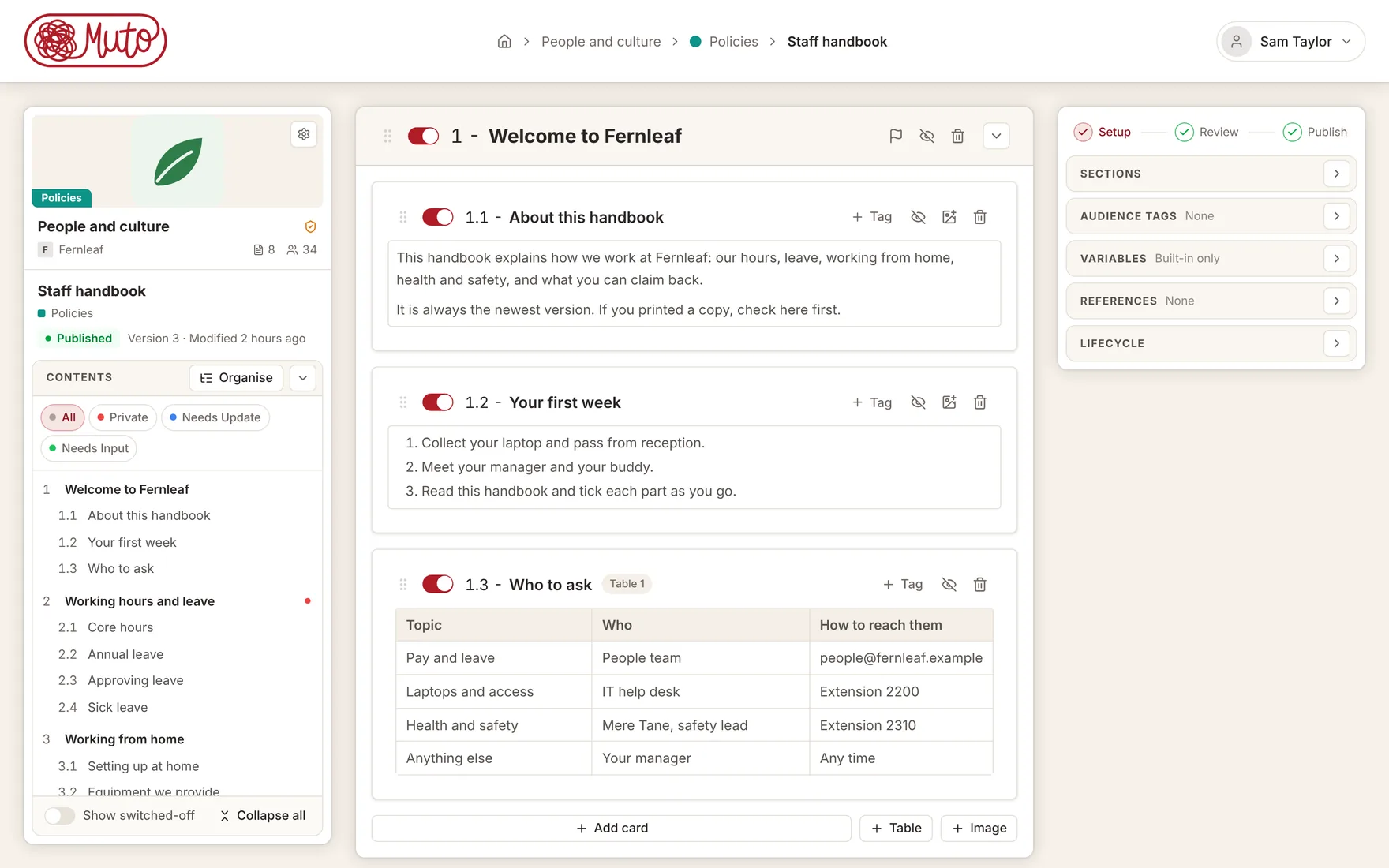
A document is sections of short cards. Your team writes at the same time, and a card being typed in is kept for that person until they finish.
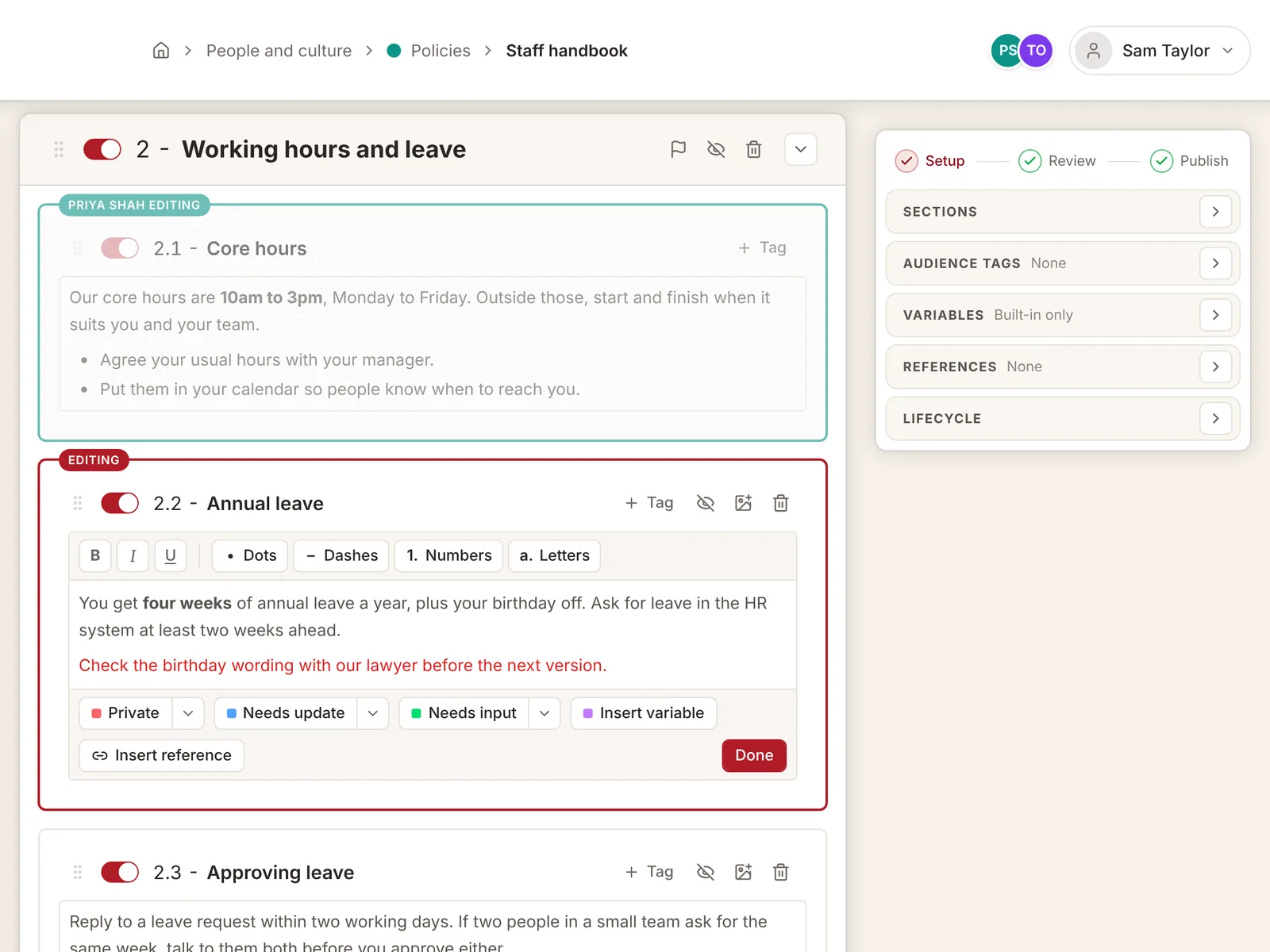
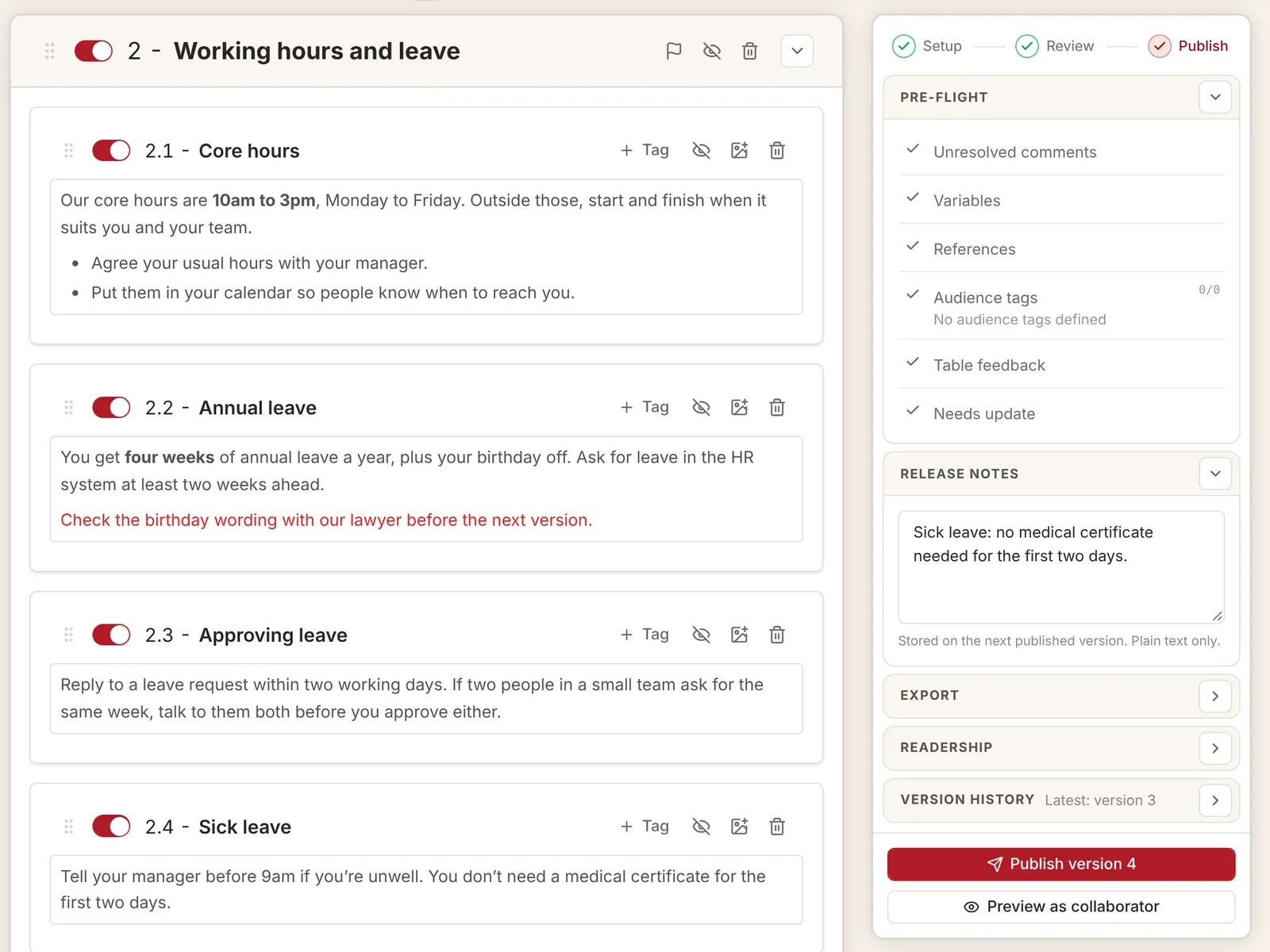
Readers get the versions you publish, never your working copy, and your private notes are left out of every one.
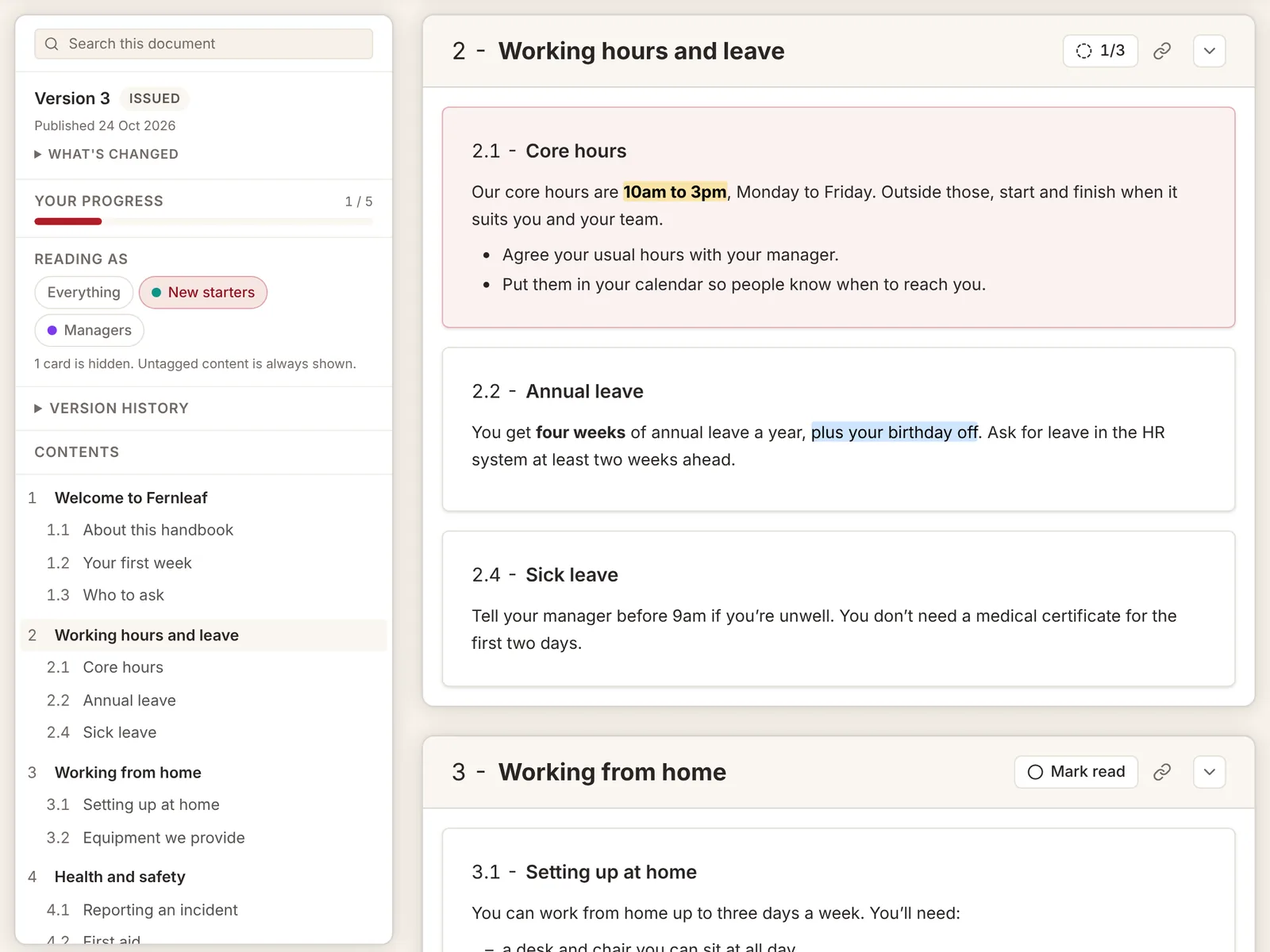
Readers always open the newest version, show just the parts meant for them, tick off what they’ve read and comment where they need to.
What’s in it
Every publish is a numbered version. Compare any two and see what changed.
Mark words as private and they never reach readers: they’re left out of every version.
Readers comment on a passage or suggest a change, and the authors answer or accept it.
Every row keeps its number and its history, with filters, colours, sums and Excel in and out.
Set your cover, header and colours once, and every PDF comes out looking like yours.
Start from your own templates. A few questions fill in the details and leave out what doesn’t apply.
Point to a section of another document, and the link tells you when that section changes.
Projects hold folders, and you choose who can write in each one and who can only read it.
Your data
Your documents, sheets and pictures are stored in Sydney, and the app runs there too.
Everyone signs in with a code by email or a password, and admins also use an authenticator app.
Not unless one of your admins lets support in, for a set time. Everything support opens goes in your company’s log.
Muto is free while a few companies try it. Tell us about yours.
Every request gets a personal reply. It isn’t instant access.
Questions first? Email hello@muto.cloud.
